Real-Time Edge Intelligence on Arm Cortex Processors
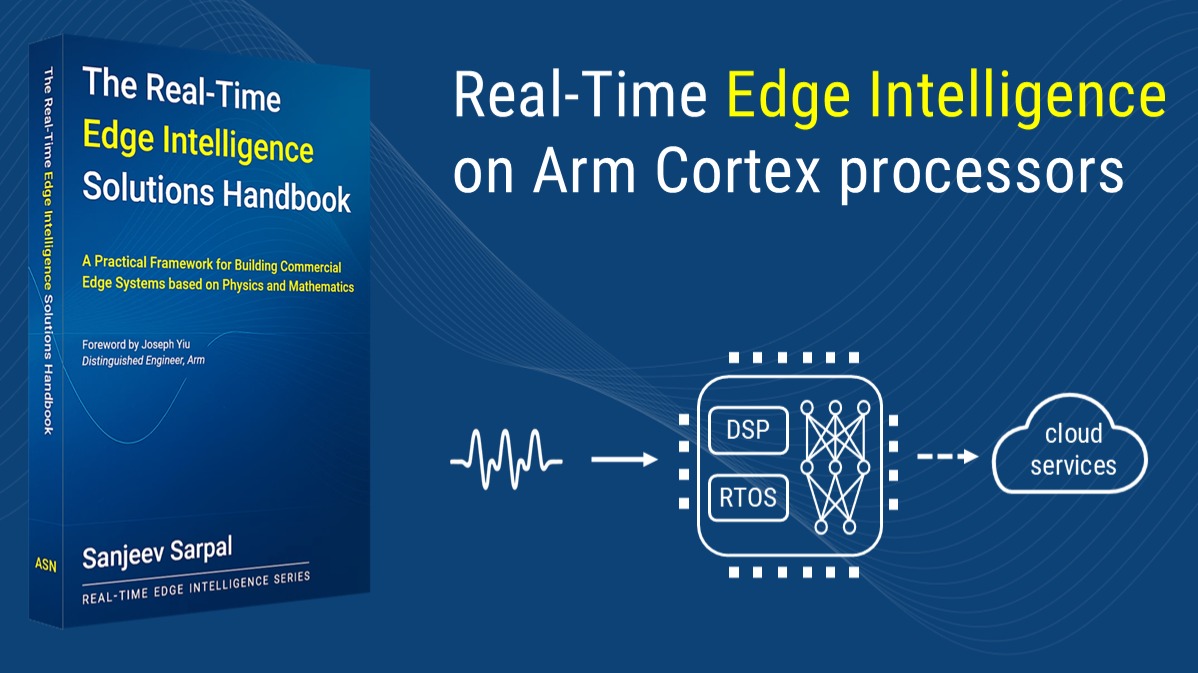
Discover a practical engineering methodology for building intelligent embedded systems by combining deterministic DSP, physics-based modelling and Edge AI. This article introduces the Real-Time Edge Intelligence framework and the handbook behind it.
About Me and Why I Wrote This Handbook
I am Dr. Sanjeev Sarpal, Director of Advanced Solutions Nederland (ASN) and a Distinguished Arm Ambassador. Over the past 30 years, I have worked on the development of commercial embedded systems across biomedical sensing, industrial monitoring, communications and intelligent edge devices.

The idea for this handbook came from a frustration I experienced many times during product development. Like many engineers, I learned from some outstanding textbooks. Classics such as Oppenheim and Schafer provide an excellent foundation in digital signal processing, but they are primarily written for university education. After finishing them, I was often left asking the same question:
“How do I actually use this to build my product?”
Over the years, I have contributed to the development of more than twenty-six commercial products. What became increasingly clear was that successful product development is about far more than designing a DSP algorithm or training a machine learning model. It requires bringing together sensing technologies, system architecture, hardware, firmware, software, stakeholder requirements, verification, certification and, increasingly, Edge AI.
I wrote the Real-Time Edge Intelligence Solutions Handbook to bridge that gap between academic theory and commercial engineering practice.
In many respects, where most university textbooks finish, this handbook begins.
What is Real-Time Edge Intelligence?
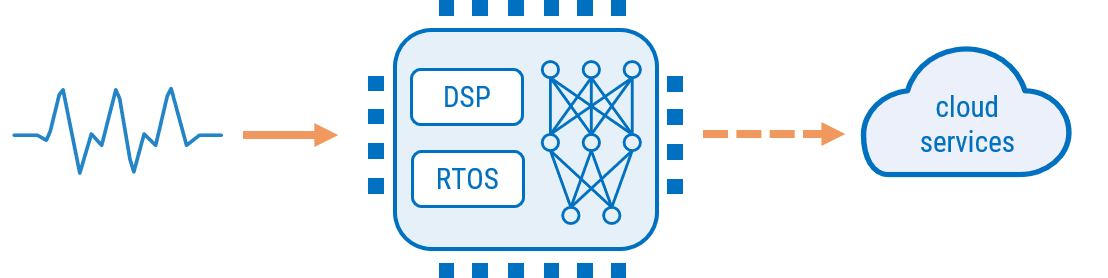
Real-Time Edge Intelligence (RTEI) extends today's Edge AI capabilities into a more disciplined and reliable engineering methodology. It combines deterministic DSP, intelligent data conditioning, physics-based modelling and modern AI workflows into a single, coherent design process for developing intelligent embedded systems.
Rather than treating these disciplines independently, RTEI provides a structured workflow that emphasises predictable behaviour, interpretability and engineering practices aligned with ISO and IEC standards. The objective is to transform raw sensor data into reliable, explainable intelligence that can be deployed with confidence in commercial products.
Whether the application is predictive maintenance, biomedical sensing, radar, industrial IoT or smart-grid monitoring, the same engineering principles apply.
5-Minute Overview
If you would like a quick introduction to the Real-Time Edge Intelligence methodology and the topics covered throughout the handbook, the following 5-minute overview provides a concise introduction.
Built on Commercial Engineering Experience
The handbook is built upon more than three decades of my own experience developing commercial embedded systems, bringing together the engineering methodologies, design practices and technical knowledge accumulated across more than twenty-six product developments.
To ensure technical accuracy and relevance, the manuscript benefited from reviews and valuable feedback from recognised experts in Arm architecture, DSP and Edge AI. Their insights helped strengthen and validate the material, while the overall engineering framework, methodology and content remain my own.
The foreword is written by Joseph Yiu, whose contributions to Arm Cortex processor architecture have helped shape modern embedded system development. Together with feedback from recognised experts across DSP and Edge AI, the handbook reflects practical engineering experience spanning the complete Real-Time Edge Intelligence workflow.
What You'll Learn
The handbook takes the reader on a three-part journey, from the fundamental principles of Real-Time Edge Intelligence through modern signals and systems methods to the practical deployment of commercial embedded systems.
It covers four engineering disciplines that are fundamental to building intelligent edge systems:
Signals & Systems — Digital signal processing, transforms, digital filtering, system modelling and state estimation for real-world sensor data.
Data-Driven & Edge AI Methods — Feature extraction, machine learning and the practical integration of deterministic engineering with data-driven inference.
Embedded Implementation & Hardware — Moving algorithms from MATLAB and Python into efficient firmware, including floating- and fixed-point implementation, quantisation, timing, memory constraints and deployment on Arm Cortex processors.
Building Customer-Centric RTEI Systems — Requirements engineering, stakeholder needs, verification, validation and engineering practices aligned with IEC and ISO standards, demonstrated through detailed commercial case studies.
Explore the Handbook
The Real-Time Edge Intelligence Solutions Handbook is available for a range of audiences.
Individual Engineers: Printed, digital and bundle editions for professional engineers, consultants and independent developers.
Companies: Ideal for engineering teams developing commercial embedded systems, with practical methodologies covering DSP, Edge AI, embedded implementation and product development.
Universities, Research Institutes & Libraries: Perpetual institutional licences designed for university libraries, research organisations and corporate knowledge centres, providing unlimited access for authorised staff and students.
To explore the available editions, institutional licensing options, sample chapters and the complete table of contents, visit the Handbook homepage.
Comments
Replies to this content are sent to the original instance.
Log in to comment.
No replies received yet.